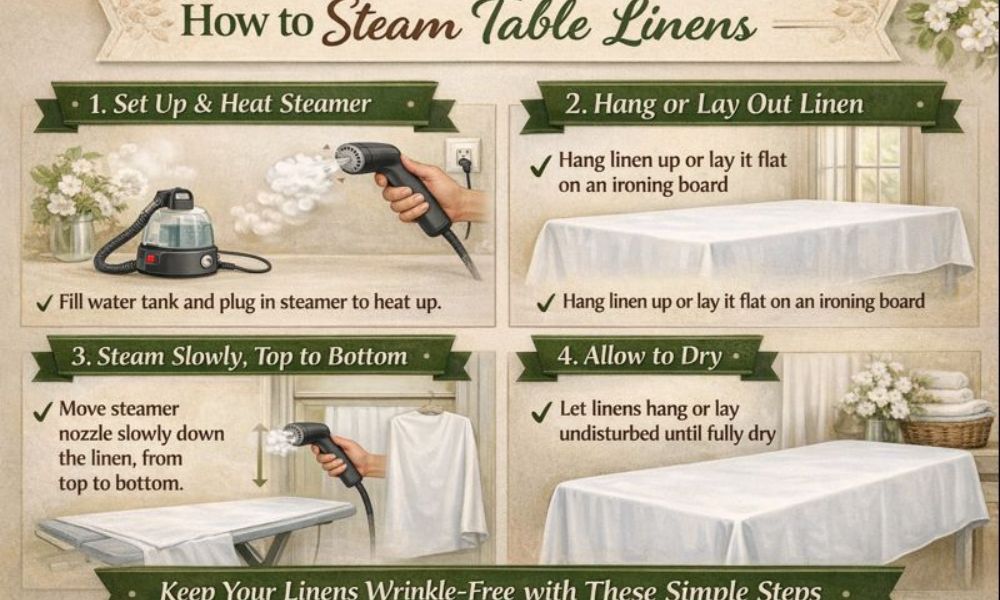
Learning how to steam table linens is one of the easiest ways to elevate your dining space without extra effort. Steaming gently removes wrinkles while protecting fabric quality, making it a beginner-friendly alternative to ironing. Whether you are preparing linens for everyday meals or special occasions, steaming helps your tablecloths, napkins, and runners look clean, fresh, and elegant with minimal time and tools.
Why Steaming Table Linens Makes a Big Difference
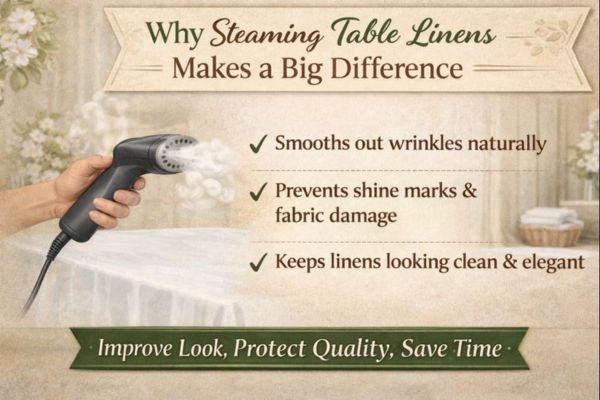
Steaming table linens instantly improves their appearance by relaxing fabric fibers and smoothing out creases naturally. Unlike ironing, steaming reduces the risk of shine marks, scorching, or fabric damage—especially on delicate materials. It is also faster and more convenient, allowing you to refresh linens just before setting the table and create a welcoming dining environment effortlessly.steam tablecloths napkins
Common Mistakes Beginners Make When Steaming Linens
Many beginners struggle because they steam table fabrics that are tightly folded or completely dry. This makes wrinkle removal harder and less effective. Another common mistake is holding the steamer too close, which can cause excess moisture or water spots. To master how to steam tablecloths and napkins, always allow fabrics to hang freely, use slow and steady movements, and let the steam relax the wrinkles instead of forcing them out.
Understanding Different Types of Table Linens
Not all table table fabrics react the same way to steam. Knowing your fabric type helps you choose the right steaming method and avoid damage.
Cotton and Everyday Fabrics
Cotton table table fabrics are durable, forgiving, and easy to steam. They respond well to heat and moisture, allowing wrinkles to release quickly. These fabrics are perfect for beginners learning how to steam tablecloths and napkins for daily use.
Linen and Delicate Materials
Linen and delicate fabrics require gentle handling. Steaming is ideal because it smooths wrinkles without direct pressure. Use light steam and slow strokes to preserve the natural texture and prevent overstretching.
Blended and Specialty Fabrics
Blended fabrics often include synthetic fibers that require lower heat. Always test a small area first. Understanding fabric blends helps prevent overheating while still achieving a crisp, polished finish.
Tools You Need Before You Steam Table Linens
To steam tablecloths and napkins effectively, you need a reliable steamer, distilled water, and a hanger or flat surface. A handheld steamer works well for napkins and runners, while a standing garment steamer is better for large tablecloths. Using the right tools makes steaming easier, faster, and more consistent.
Preparing Your Table Linens for Steaming
Preparation plays a key role in successful steaming. If table fabrics are extremely dry, lightly mist them with water. Shake out folds and hang the fabric so gravity helps release wrinkles. Proper preparation ensures better results and makes how to steam tablecloths and napkins much simpler.
How to Steam Table Linens Step by Step
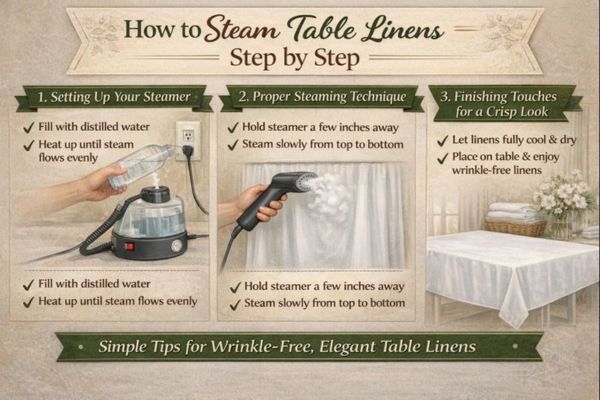
Following a clear step-by-step method helps beginners achieve professional-looking results without frustration.
Setting Up Your Steamer
Fill your steamer with distilled water and allow it to heat fully. Make sure steam flows evenly before starting. A properly heated steamer prevents uneven wrinkle removal.
Proper Steaming Technique
Hold the steamer a few inches away from the fabric and move it slowly from top to bottom. Let the steam penetrate the fibers rather than pressing hard. This technique smooths wrinkles safely and evenly.
Finishing Touches for a Crisp Look
After steaming, allow table fabrics to cool and dry completely before folding or placing them on the table. This step locks in smoothness and keeps table table fabrics wrinkle-free longer.
Handheld Steamer vs Garment Steamer for Table Linens
Choosing the right steamer makes learning how to steam tablecloths and napkins much easier. Handheld steamers are lightweight, affordable, and perfect for small items like napkins and placemats. Garment steamers offer more power and larger water tanks, making them ideal for big tablecloths or multiple table fabrics at once. The best option depends on linen size and frequency of use.
Best Methods for Steaming Large Tablecloths
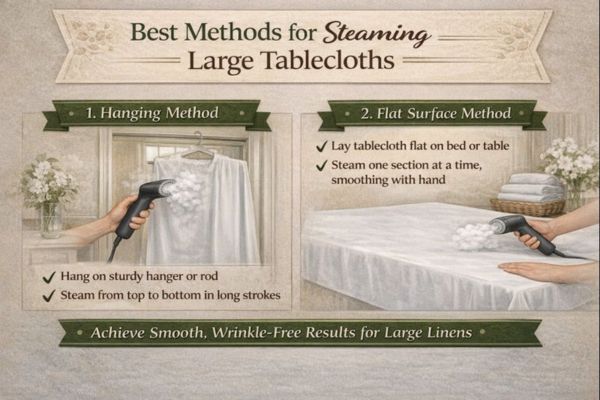
Large tablecloths may seem challenging, but the right method makes them manageable.
Hanging Method
Hang the tablecloth on a sturdy hanger or curtain rod. Steam from top to bottom using long, smooth strokes. Gravity helps pull out wrinkles naturally and prevents new creases.
Flat Surface Method
If hanging space is limited, lay the tablecloth flat on a clean bed or table. Steam one section at a time while smoothing the fabric by hand. This method offers better control for thicker fabrics.
How to Steam Table Linens Without a Steamer
If you don’t own a steamer, you can still practice how to steam tablecloths and napkins using household alternatives. Hanging table fabrics in a steamy bathroom after a hot shower helps loosen light wrinkles. An iron with a steam setting, used slightly above the fabric, can also mimic steaming for quick touch-ups.
Tips for Removing Deep Wrinkles Safely
Deep wrinkles require patience. Lightly mist the fabric and steam slowly with repeated passes. Avoid holding steam in one spot too long to prevent water saturation. Gentle consistency delivers the best results without damaging fibers.
How to Steam Table Linens for Special Occasions
For events and gatherings, steam table fabrics on the same day for a flawless presentation. Hang them immediately after steaming to prevent new wrinkles. Paying attention to edges and corners adds a refined, elegant look to your table setup.
Caring for Linens After Steaming
After steaming, allow table fabrics to cool and dry fully before folding or using them. Proper post-steaming care helps maintain smoothness and extends fabric life.
Storing Table Linens to Keep Them Wrinkle-Free
Proper storage is essential after mastering how to steam tablecloths and napkins. Fold or roll table fabrics neatly and store them in breathable fabric bags or organized drawers. Avoid overcrowding to prevent new creases.
Beginner-Friendly Tips for Making Steaming a Routine
Make steaming easier by doing it right after washing while table fabrics are slightly damp. Setting a regular linen-care routine saves time and keeps fabrics consistently smooth.
Final Thoughts
Learning how to steam tablecloths and napkins is a simple yet valuable skill that enhances both everyday dining and special occasions. With the right tools, gentle techniques, and proper care, anyone can maintain smooth, elegant table table fabrics that elevate the entire dining experience.